
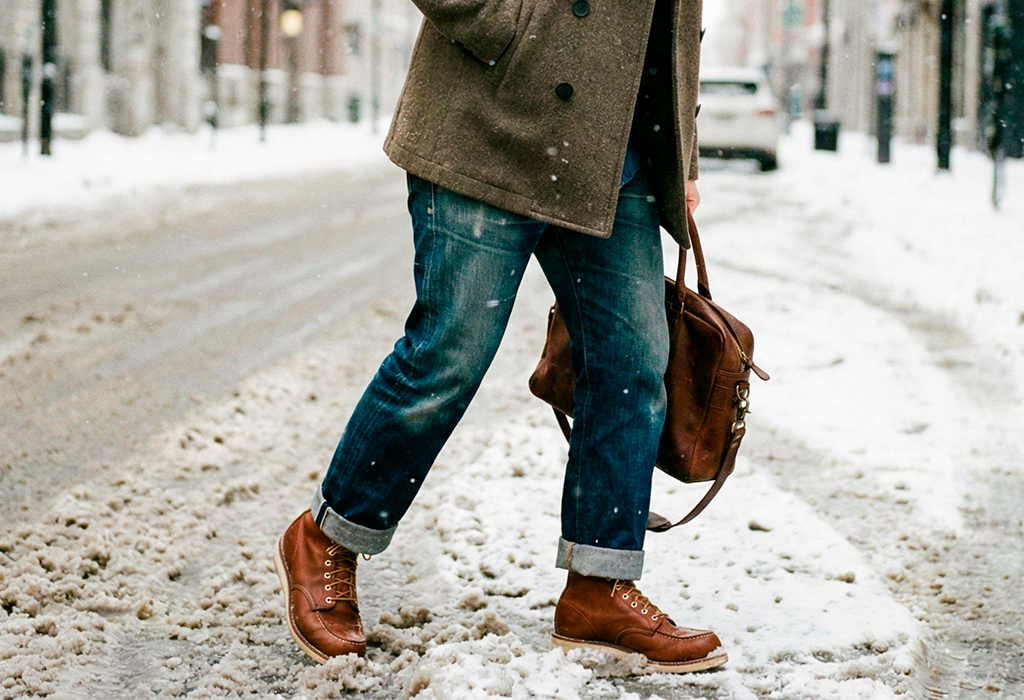
Experienced winter outdoorsmen are probably already raising an eyebrow at the words “cold weather” and “jeans” being used together.
And honestly, they’re not wrong.
Here’s the harsh reality: denim is not the best fabric for cold, snowy winter weather.
I wish it weren’t true.
But there you have it.
Cotton denim does a poor job of repelling wind and wetness—two of the biggest enemies when temperatures drop. Once denim gets wet, it stays wet. And when wind cuts through it, your legs feel it fast.
So why even talk about jeans in winter?
Because denim is the backbone of most men’s wardrobes.
When you’ve got a closet full of jeans, you’re going to wear them—whether they’re ideal for the environment or not. And since that’s the reality for most men, the smarter approach isn’t to ban jeans from winter entirely.
It’s to wear them more intelligently.
Below are my practical recommendations for making jeans a more functional part of your winter wardrobe—without pretending they’re something they’re not.
For a video summary, you can also check out my breakdown on cold-weather denim.
1. Buy Jeans Made Specifically for Cold Weather
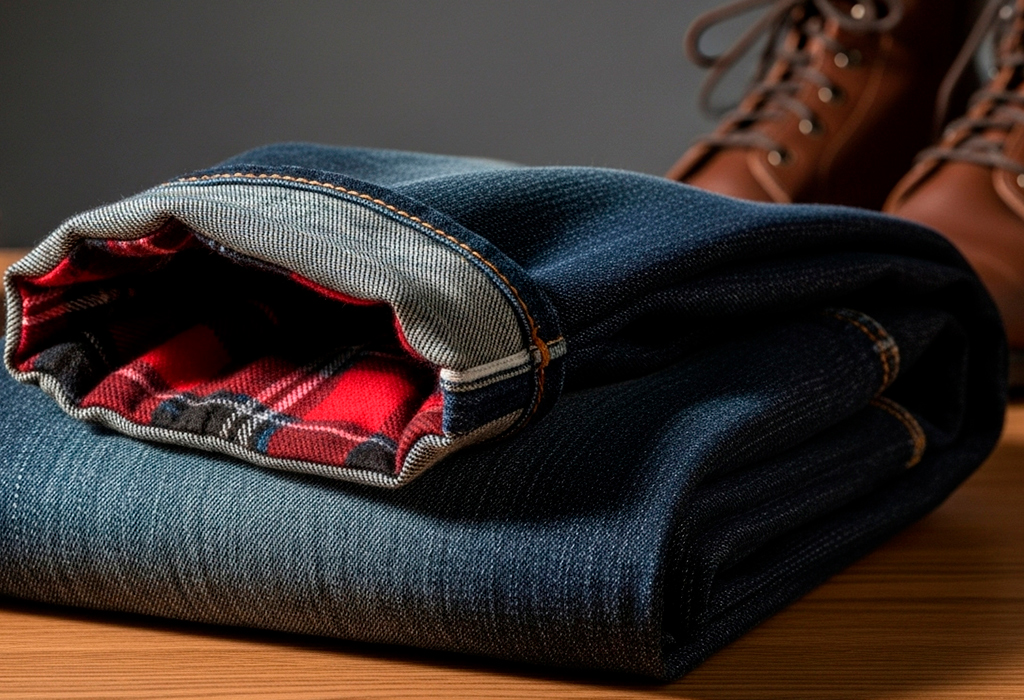
The most straightforward solution is to buy jeans designed for winter use.
The most common cold-weather upgrade is a built-in lining.
Flannel-lined jeans are the classic option—usually featuring a rustic plaid interior. Some brands go further and use synthetic fleece materials such as polar fleece or sherpa lining underneath the denim.
That extra layer adds insulation and warmth, which absolutely helps. But it’s important to be clear about what lined jeans don’t do well.
They are still:
- Not truly waterproof
- Not especially windproof
Flannel-lined and fleece-lined jeans perform best on cold but relatively calm days, or in semi-protected environments—working in a garage, warehouse, or shop that’s open to the cold but shielded from heavy snow and wind.
Now, here’s the bad news for men who like a sharper silhouette.
I’ve never seen a genuinely stylish pair of flannel-lined jeans.
Most are:
- Straight-legged
- Cut wide
- High-rise
- With little to no taper
They’re warm, durable, and practical—but they’re built for work. And that’s okay, as long as you understand what you’re buying.
2. Choose a Heavier Denim Weight Instead

If you want warmth without sacrificing style, heavier denim is your best option.
Denim fabric is measured by weight in ounces per square yard. Most mass-market jeans fall somewhere between 12 and 16 ounces, which is fine for mild conditions but less ideal when it’s cold.
Heavier denim—18, 20, or even 22 ounces—offers real advantages:
- Thicker fabric traps more heat
- Increased stiffness reduces wind penetration
- Snow sits on the surface longer before melting through
Cotton is still cotton—it’s not magically waterproof—but heavier denim buys you time and comfort.
The good news?
Many boutique and independent denim manufacturers work extensively with heavy-weight fabrics.
Look for:
- Raw denim
- Selvedge denim
- Independent or heritage denim brands
These often combine heavier fabric with a more flattering, shaped cut. They do take longer to break in, but once they do, heavy denim makes a noticeable difference in cold weather.
3. Wear Thermal Layers Under Your Jeans

If you already own jeans you like and don’t want to replace them, the simplest solution is layering underneath.
Thermal underwear and classic long johns are the obvious choices, and they’re widely available—from big box retailers to outdoor and sporting goods stores.
But don’t limit yourself to just one category.
Other effective underlayers include:
- Running tights
- Stretch athletic leggings
- Slim yoga pants
The key is fit. Your underlayer needs to be slim enough—and your jeans relaxed enough—that fabric doesn’t bunch or wrinkle awkwardly.
Synthetic, moisture-wicking materials work best here. Polyethylene and polypropylene derivatives, including polar fleece-style fabrics, are inexpensive, widely available, and very effective at retaining warmth without holding moisture.
If you’re interested in deeper guidance on seasonal denim choices, this article is worth reading:
4. Use Jeans as an Inner Layer

Here’s a strategy most men never consider—but should.
Instead of forcing jeans to act like winter pants, treat them as an inner layer.
This approach works especially well if you:
- Commute through snow
- Walk outdoors but work indoors
- Need to look presentable once you arrive
Insulated bib-style overalls with waterproof exteriors are incredibly effective, though not exactly stylish. The upside is that they’re easy to unstrap and remove once you’re inside.
A more flexible option is basic rain pants worn over jeans. Even uninsulated rain pants dramatically improve wind and moisture protection for short outdoor exposure.
Layering pants may feel strange at first, but it works. In fact, even something as simple as pajama pants under jeans and rain pants over them creates a makeshift snow suit.
Make decisions based on your budget and needs—but never hesitate to layer over your jeans in winter.
It’s easy to remove outer layers once you arrive, and you’ll look far better for having kept your jeans dry and intact.
5. Know When Jeans Are the Wrong Call

This is the chapter most articles avoid—but it matters.
There are conditions where jeans simply aren’t the right tool:
- Prolonged exposure to wet snow
- Strong, sustained winds
- Sub-zero temperatures without movement
In those cases, purpose-built winter pants exist for a reason.
Wearing jeans in winter isn’t about stubbornness—it’s about understanding limitations and working around them intelligently.
Final Thoughts: Make Denim Work for Winter—Don’t Fight Physics

Jeans aren’t ideal winter pants.
But they’re familiar. They’re comfortable. And for most men, they’re non-negotiable.
So instead of pretending denim is something it’s not, the smarter move is to:
- Choose better denim
- Add insulation where needed
- Layer strategically
- And remove layers when appropriate
Do that, and jeans can absolutely earn their place in your winter wardrobe—without sacrificing comfort, function, or appearance.
Cold weather isn’t about looking tough.
It’s about staying warm enough to get things done.
And style, when done right, follows naturally.